“Dolemite is my name, and f***ing up mother f***ers is my game.”
About the Series: Blaxploitation and the Cities That Make Us is a 6-week analytical series exploring the relationship between Blaxploitation protagonists and the communities that shape them. Whether Los Angeles, Harlem, Oakland, or Detroit, these cities are living organisms that influence each protagonist’s identity. Through historical, cultural, and film analyses, this series examines how each project reflects the neighborhoods, struggles, and communities that gave rise to some of Black cinema’s most adored heroes.
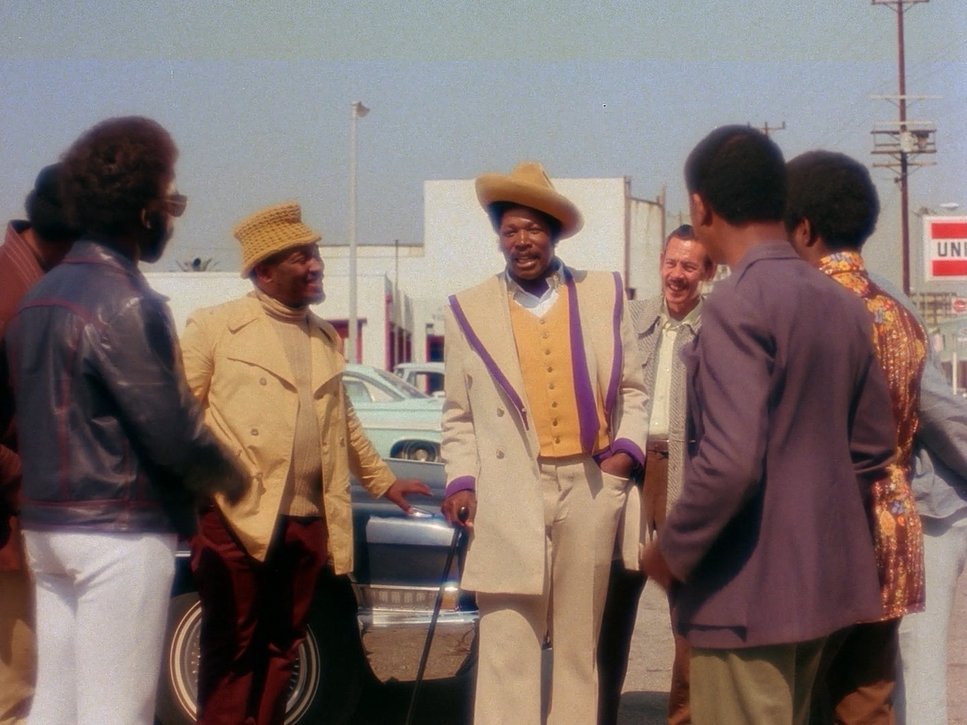
Rudy Ray Moore as Dolemite
Dolemite maintains its status as a pivotal work in the Blaxploitation genre, not only for its audacious style and eccentric character, but for the way it redefined Black American representation in American cinema and pop culture. The film’s significance lies in how the era’s stereotypical images became sources of empowerment, with the figure of Dolemite (Rudy Ray Moore) challenging cinematic conventions and building future generations of artists. Moore’s cool, slick demeanor and rhythmic cadence as Dolemite signal the film’s impending status as a cinematic icon. Directed by D’Urville Martin and written by Jerry Jones (screenplay) and Rudy Ray Moore (story), Dolemite is released from prison and hastily takes control of the City of Angels. As he seeks to take down his adversaries, he leaves a lasting impression on the cast, Los Angeles, and on contemporary culture.
Dolemite, set in Los Angeles in 1975, reimagines the city by taking familiar touchpoints such as palm trees, gritty streets, and sweet sunshine and transforming them into the new Blaxploitation playbook: debauchery, kung fu, and revenge. From filming car chases in Griffith Park and nightclubs on Crenshaw Blvd, to Hollywood record shops, Dolemite touched each corner of the city and created a comfortable home for his character.