About the Series: In this 7-week series, I will review and analyze films specially curated for the theme “Women on the Verge (Of a Nervous Breakdown).” Enjoy analyses and thoughts on our cinematic favorites, underrated gems, and discover what makes the featured women protagonists, “On the Verge.”
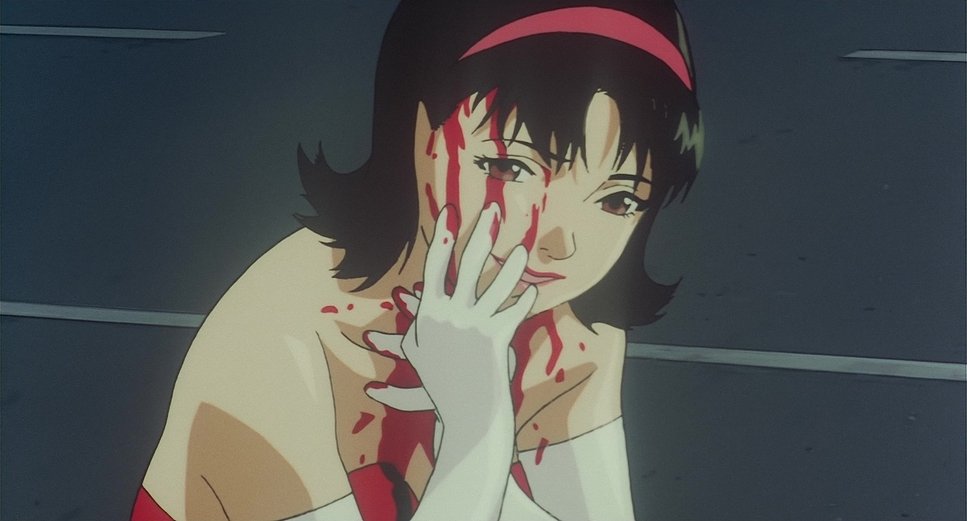
Dealing with themes of exploitation, identity, voyeurism, and personal portrayal, Perfect Blue was a highly anticipated watch that did not disappoint. Ambiguity, confusion, distraction, and surveillance reign supreme in this psychological horror directed by Satoshi Kon and written by Sadayuki Murai. Centering on Mima, a young woman who takes significant agency over her life early in the film, Perfect Blue acts as a grim reminder that women who are bold enough to claim personal power over their lives often face dire consequences from structures and malevolent forces, leading to uninhibited gaslighting and psychological turmoil, often inflicted by confidants and close personal connections. In this case, Mima is victimized by her manager, Rumi.

Mima’s decision to leave the successful J-Pop group, CHAM!, to pursue her dream of becoming an actress is the unfortunate origin of her imprisonment in a folie à deux. Mima’s paranoia ignites her desire to push through her delusions and achieve dignity as an actress. Betraying her boundaries and disrespecting her limitations to please a mirage of herself, she begins her descent into The Breakdown. Her previous identity as a J-Pop star and new actress cracks the shell of who she once was. Grievously, many young women have experienced similar circumstances. The Breakdown lives here; the first act of self-betrayal. The negative intrusive thought, “you are tarnished, and everyone hates you,” plays on loop in Mima’s head. Her delusions are relentless. Jealousy and hatred are the root of all evil in this film. Eventually, it comes to light that Rima was the origin of Mima’s demise. Oftentimes, our fellow women are just as ruthless as the systems that control us. Perfect Blue is a story of exploitation and loss of agency. Mima’s voice was wholly stripped from her by misguided belief in an abuser, the paranoia from her stalker, and her once positive inner voice, now replaced by self-flagellation. Mima’s fate lies where reality ends, and delusions begin.
As women, like much else, it is our duty to free ourselves from the curse of coercion and cruelty. Mima finds self-liberation, reversing The Breakdown. Defeating her stalker was easy; it was conquering herself, her inner villain, that was violent and costly. As women, it is lamentable that ordinarily, seizing control of our lives to choose our own lane punishes us instead of uplifting us. Stripped of humanity and gaslit into believing it’s easier to stay a prisoner of what came before, womanhood is not without strife. When Mima chooses her preferred lane as an actress instead of a successful J-Pop Star, she is mentally mutilated, stalked, tortured, exploited, and causes herself to doubt everything she once thought she knew about herself. Notice how the moment Mima makes a choice for herself, opposed to blindly following orders as a young, unmarried, childless, successful woman, she becomes a passive character and suffers for it. Women are never allowed to change their minds. The act of choosing self-confidence and peace as a woman is an act of rebellion in and of itself. In the first chunk of the film, Mima is passive, with actions happening to her. By the end, she takes the first steps to reclaiming joy.
In Perfect Blue, Mima is not simply “On the Verge” of a mental breakdown; she is simply in the mental breakdown. This film explores the complexities of the torturous act of losing oneself, what it takes to destroy the ego and personality to rebuild again. A masterpiece in psychological horror, Mima is the definition of a woman who was on the verge of a mental breakdown, went through the breakdown, and is learning to piece herself together again.